

SDV Insider - October 23, 2026
Welcome back to SDV Insider.
Last week the story was governance. This week it is commitment. Four incumbents that have spent years describing the software-defined vehicle as a direction put dates, volumes and model names against it inside eight days, and three of them did it with numbers specific enough to be held to.
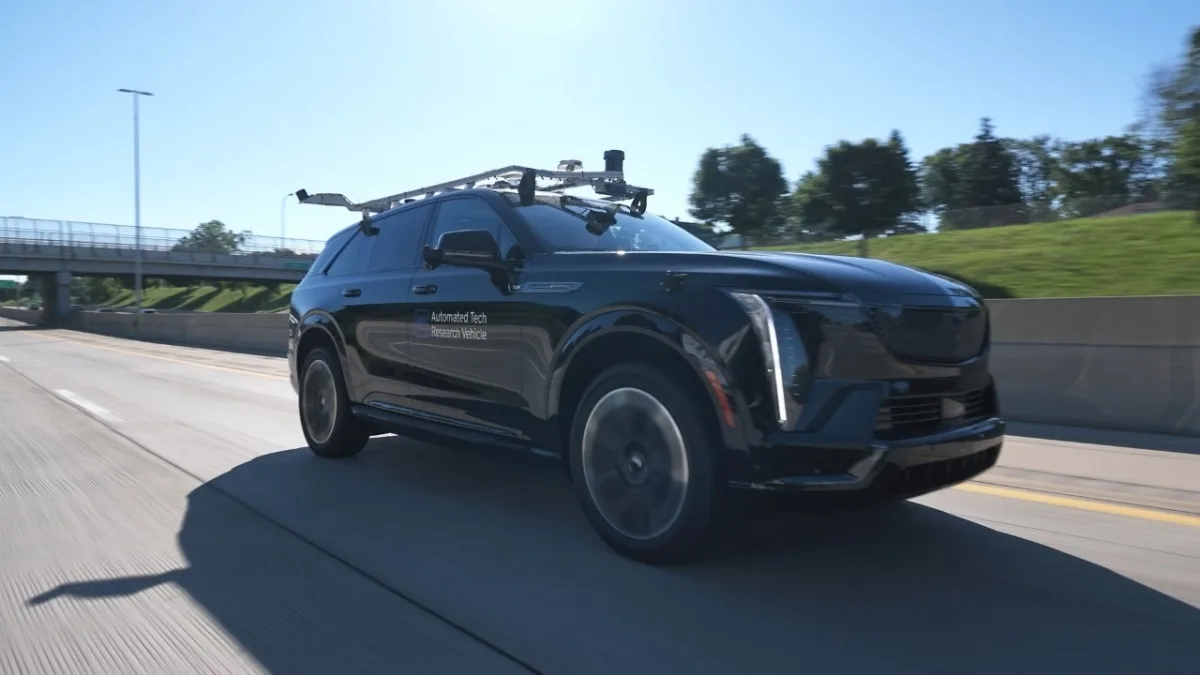
Toyota confirmed it wants its Arene platform in roughly 50 models and 10 million new vehicles a year by 2030, up from the two models that carry it now, and said out loud that it intends to charge for updates after delivery. GM described a single central compute unit arriving on the 2028 Cadillac Escalade IQ and an ambition to cut a four to five year development cycle in half. Mercedes-Benz and Volvo Cars, within a day of each other, extended their NVIDIA partnerships onto the same Hyperion, Alpamayo and Halos stack. Subaru, pointedly, announced its own integrated controller co-developed with AMD and said it has no plans to adopt Arene, even though Toyota owns a fifth of it.
Meanwhile China kept doing what it did last week, which is legislate the detail. MIIT confirmed a second round of Level 3 approvals is underway and opened consultation on who is allowed to fit the turquoise light that tells everyone else the car is driving itself. The contrast with the Western announcements is worth sitting with: one side is publishing roadmaps, the other is publishing requirements.
The signal this week: the platform bets are now public, dated and numbered, which means for the first time they can be audited against delivery rather than admired as strategy.
🚀 Top Story
Toyota Puts Arene in 10 Million Vehicles a Year and Says It Will Charge for the Updates
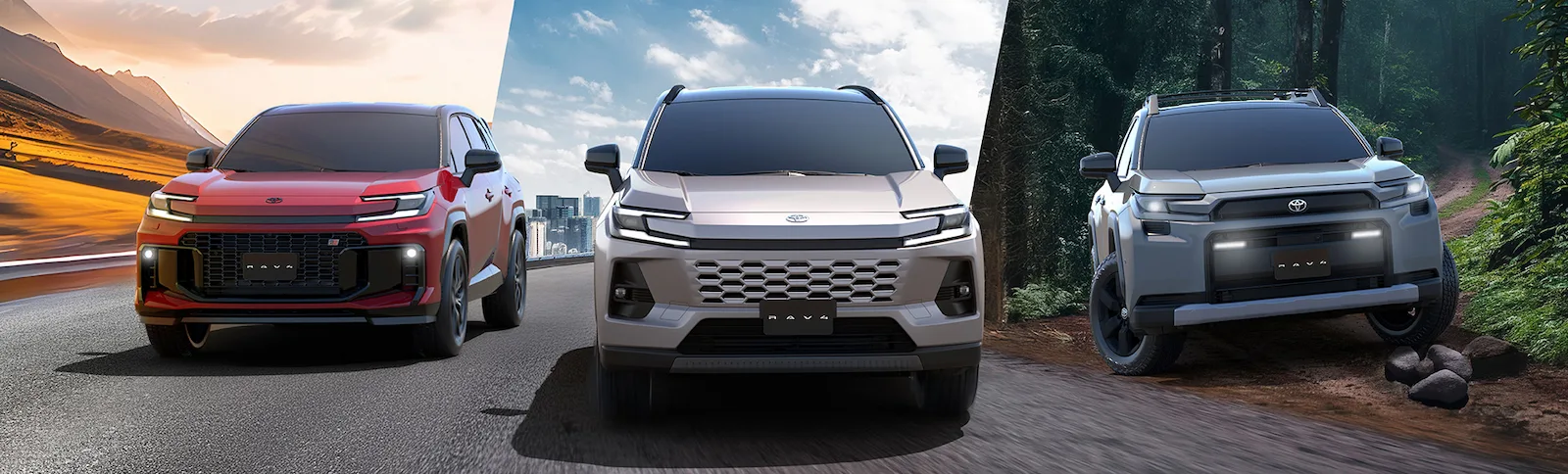
Toyota officials said on Friday, October 16 that the company intends to make all of its roughly 50 vehicle models software-defined by 2030, with its in-house Arene platform deployed in about 10 million new vehicles produced worldwide each year. Jiji Press carried the figures from Nagoya; Reuters reported the same numbers the same day and added that chief technology officer Hiroki Nakajima had laid out the deployment plan at an investor briefing in Brussels the week before, and that Toyota intends to extend Arene toward 2035 including into vehicles from alliance partners.
The starting point is two models. Arene debuted in the revamped RAV4 launched in 2025, and getting from there to 50 nameplates in four years is a manufacturing and validation problem at least as much as a software one. Every model on the platform has to carry the compute, the update path and the validation evidence, across hybrids, battery electrics and combustion cars that currently share very little electronically.
The part that did not get the headlines is the business model. Jiji reported plainly that Toyota aims to earn revenue from software update fees charged after delivery. That is the first time the volume target and the monetization intent have appeared in the same statement, and it changes what the 10 million number is for.
Our Take: Treat the 10 million figure as the serious number and the 50 models figure as the hard one. Volume follows from putting Arene on the high-runner nameplates; coverage means dragging the long tail of low-volume, regionally specific models onto a common electronic architecture, which is exactly the work that has slipped at every OEM that has attempted it. Toyota has an advantage its peers do not, which is that it can amortize the platform across more units than anyone else, and a constraint its peers do not, which is that its lineup is the most heterogeneous in the industry. The update-fee line is the one to watch, because it quietly reframes the whole program. A platform built to reduce engineering cost and a platform built to generate post-sale revenue are specified differently: the second needs entitlement management, billing, regional consumer-law compliance and a feature roadmap that holds value back from the initial sale. Toyota is now committed in public to both, and offering the platform to alliance partners afterward means it has to work for companies that did not design around it. Subaru, 21 percent owned by Toyota, declined it this week. That is the most informative data point in the story.
⚙️ Industry Pulse
GM Puts One Computer in the Middle of the Car and Halves the Development Clock
At GM Forward on October 21, GM described a single Central Compute Unit consolidating perception, propulsion, active safety and chassis control alongside in-cabin AI and autonomous driving, claiming 40 times the computing power of the current setup, 30 percent less wiring length and mass, and up to 50 percent faster cellular connectivity. It is propulsion agnostic and debuts in 2028 on the Cadillac Escalade IQ before extending to high-volume gas SUVs and trucks, three-row crossovers and fourth-generation EVs. Autonomous highway driving lands on the same vehicle in the same year, with pre-production cars in closed-course testing, backed by 1.2 billion customer miles of Super Cruise and roughly a million miles a month of multisensor data collection. The development claim is the louder one: GM says enterprise AI and virtualization can halve a four to five year cycle, citing more than 300,000 battery designs evaluated virtually before a physical prototype and a month from first LMR pack concept to program approval. OnStar, at 30 years old and 12 million subscribers, gets an AI assistant shipping to the 2027 Cadillac Lyriq by over-the-air update. Note what is absent: no silicon partner is named anywhere in the release.
Mercedes-Benz Extends the NVIDIA Partnership and Keeps MB.OS in the Middle
Announced October 16, the extension pairs MB.OS, which carries the driving functions and the over-the-air update path, with NVIDIA Hyperion for in-vehicle compute and sensing, the Alpamayo Stack for full-stack driving software and AI reasoning, and Halos as a parallel safety stack providing redundancy and guardrails. The stated targets are point-to-point urban assistance, active safety and automated parking, with future SAE Level 4 applications including robolimousines. Jörg Burzer, the board member responsible for development and procurement, framed the existing work as having produced the first Mercedes-Benz urban point-to-point assistance system for the Western world; NVIDIA automotive lead Ali Kani returned the compliment. No deployment dates are given. The structural point is that Mercedes kept its own operating system as the integration layer and bought the autonomy stack, which is a different bet from owning both or owning neither.
Volvo Takes the Same NVIDIA Stack and Points It Door to Door
Volvo Cars announced its own expanded NVIDIA partnership on October 15, one day before Mercedes and on the identical technology base: Hyperion, Halos and the Alpamayo Stack. The framing differs. Volvo describes a system meant to handle the whole trip, highways, dense urban streets and parking, debuting in an unnamed next-generation car as part of its largest product push, with eyes-off and mind-off operation introduced gradually. Håkan Samuelsson leaned on the safety heritage, Jensen Huang on accelerated computing. The collaboration dates to 2017. Two European premium brands landing on the same supplier stack within 24 hours is the week in miniature: the autonomy layer is consolidating into a small number of vendor platforms while the operating system above it stays a brand decision.
Subaru Builds Its Own Integrated Controller and Declines Toyota’s Platform
At a strategy briefing at its research center in Sano City on October 18, Subaru said it will launch software-defined vehicles in the second half of this decade, cutting development times by roughly 40 percent through digital simulation in prototyping and by running design, testing and production preparation in parallel. It will roll out a newly developed integrated electronic control unit across the lineup, built around a chip co-developed with AMD, and standardize electronic platforms across electric, hybrid and gasoline models, with over-the-air updates planned for driver assistance, automated driving and vehicle performance functions. Subaru said it has no current plans to adopt Arene despite Toyota’s 21 percent stake. A company selling roughly a million vehicles a year choosing to build its own integrated controller rather than take a platform its largest shareholder is offering for free is a statement about what adopting someone else’s platform actually costs in independence.
💼 Company Moves & Partnerships
PACCAR Moves Telematics into the Factory Build
Announced October 19 at the ATA Management Conference in Charlotte, PACCAR Connect is a factory-integrated platform combining telematics, driver tools and fleet applications on Kenworth and Peterbilt Class 8 trucks, running on a high-definition touchscreen, covered by factory warranty, and explicitly positioned to replace multiple aftermarket devices. Features include a voice assistant, up to eight camera inputs with views triggered by reverse and turn signals, dual Bluetooth pairing and CarPlay, and PACCAR Apps covering the digital operator’s manual, tutorials and vehicle health. The PACCAR Connect Portal gives fleet managers vehicle health, remote diagnostics, mileage, location, warranty status and idle time, plus access to the Virtual Vehicle applications marketplace. Chief technology officer John Rich said it advances the connected vehicle strategy. Availability begins early 2027. The release centers on telematics, diagnostics and applications rather than over-the-air software updates, so we will take it at face value. The shift worth noting is that connectivity becomes a factory-fitted, factory-warranted part of the truck with an applications marketplace attached, which gives fleets one integrated system where they previously assembled several.
Li Auto’s Chip and Domain Controller Unit Raises 1.625 Billion Yuan
Li Auto announced equity financing of 1.625 billion yuan, about 243 million dollars, for Shanghai Mahe Xin Technology, its chip and domain controller subsidiary. Li Auto contributed 1 billion yuan through a wholly owned subsidiary; external investors Hangzhou Jingtao, Lanchi Ventures, Huaye Tiancheng and MiraclePlus put in 625 million yuan, with Hangzhou Jingtao holding a one-off right to invest up to a further 500 million yuan on the same terms before December 31, 2026. Two employee share schemes run alongside. If fully taken up, Li Auto holds about 74 percent, external investors 6.6 percent and employee schemes 19.4 percent, and Li Auto continues to consolidate the accounts. The stated purpose is to pursue opportunities beyond automotive and gain economies of scale. The employee allocation is the tell: nearly a fifth of the entity set aside to retain silicon engineers is what it now costs an OEM to keep a chip team that could leave for a pure-play.
🏛️ Regulation & Policy
China Opens a Second Round of Level 3 Approvals
Guo Shougang, who heads MIIT’s equipment industry department, told the 2026 World Intelligent Connected Vehicles Conference in Beijing on October 22 that work on the second batch of Level 3 pilot approvals is underway. No companies, models or timeline were disclosed. The first batch, granted in December 2025, covered Changan’s Deepal SL03 and BAIC’s Arcfox Alpha S, each limited to single-lane operation on designated routes, 50 km/h in congested Chongqing traffic and 80 km/h in Beijing respectively. These are route-bound road-use pilots rather than national authorizations. MIIT said its next steps are stronger operational monitoring and safety measures. Sitting behind it is the mandatory national standard for Level 3 and Level 4 systems announced in August, effective July 1, 2027, which requires safety at least equivalent to a competent attentive human driver and obliges Level 3 systems to monitor whether the driver can take over.
China Would Reserve the Turquoise Light for Level 3 and Above
MIIT opened public consultation on October 20, closing December 19, on five mandatory national standards, one of which sets rules for automated driving system marker lights. Turquoise becomes the dedicated color, optional to fit, permitted only on vehicles with Level 3 or higher systems, mountable front, rear and sides, switching on automatically when the function activates and off when it disengages, with manual control prohibited. The draft also bans text and anthropomorphic faces on lamps, restricts gesture and voice control of lighting, and separates turn and reversing lights from brake and rear fog functions. The recommended effective date is January 1, 2028, with transition periods of up to 48 months depending on the provision and whether a model is already type-approved. The reason this matters beyond the aesthetics: it makes the automation level a visible, regulated external claim, which means marketing a Level 2 system as something more acquires a compliance cost it did not have.
📊 Market & Reports
Frost & Sullivan Benchmarks Nine In-Car Assistant Providers and Six of Them Are Not Automotive
Released October 20 from London, the Frost Radar on AI-Powered In-Car Assistants benchmarks nine providers: Cerence AI, Google, Amazon, Apple, SoundHound AI, Microsoft, OpenAI, Perplexity and iNAGO. The firm projects connected vehicle sales rising from 68.3 million in 2026 to 84.6 million in 2032 and argues the assistant is becoming the central interface of the software-defined vehicle, with competition shifting toward proactive help, personalization, deep vehicle integration and secure handling of driver data. The named revenue paths are premium subscriptions, on-demand features and hands-free payment for charging and parking. Treat the forecast as directional. Treat the roster as the finding: on a list of nine, two are automotive specialists and the rest are consumer technology and frontier AI companies, which is a reasonable description of who an OEM is actually negotiating with when it specifies the cabin assistant, and of how little of that stack it will end up owning.
👋 That’s a Wrap
This week’s signal:
- Toyota attached a volume to its platform and a price to its updates. Fifty models and 10 million vehicles a year by 2030, from two models today, with post-delivery update fees named as a revenue source for the first time.
- Autonomy is consolidating onto vendor stacks while the operating system stays a brand decision. Mercedes-Benz and Volvo Cars took the same NVIDIA Hyperion, Alpamayo and Halos combination within a day of each other, and Mercedes kept MB.OS as the integration layer.
- GM named a date and a vehicle. One central compute unit, 2028, Cadillac Escalade IQ, with autonomous highway driving on the same car and a claim that AI and virtualization can halve the development cycle.
- Not everyone wants a shared platform. Subaru is building its own integrated controller on an AMD co-developed chip and declined Arene, with its largest shareholder offering it.
- China is still writing requirements while the West writes roadmaps. A second batch of Level 3 pilot approvals is underway, and the turquoise automation light would become a regulated claim restricted to Level 3 and above.
Four incumbents stopped describing the destination this week and published the schedule. Schedules are the part you can be held to.
- The SDV Insider Crew 🚗💨